Study #22
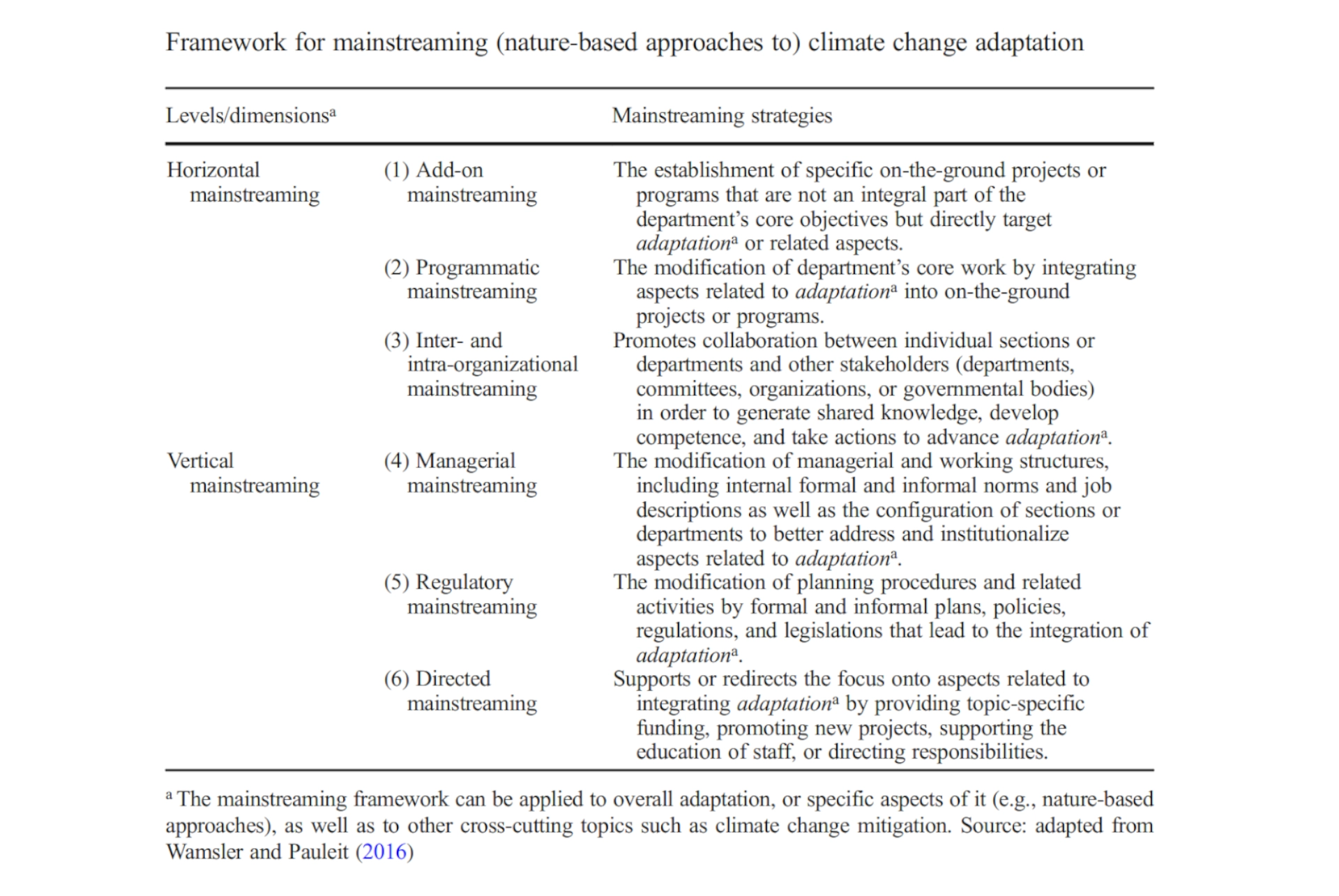
Figure: Framework for mainstreaming (nature-based approaches to) climate change adaptation.
STUDIES
2026-03-30
What can we learn from science? - undesirable outcomes of public participation
In 2018–2019, researchers led by Christine Wamsler and colleagues at Lund University worked with municipal planners in southern Sweden to investigate how real citizen engagement influences sustainability outcomes in nature-based solutions and urban climate adaptation planning.
Contrary to popular belief that “more voices = better results,” the study reveals that under current conditions, citizen involvement often hinders sustainability goals rather than supports them.
The team found that participation frequently led to:
- Contestation and conflict instead of collaboration
- Inaction on critical nature-based actions
- A lack of civic interest or misunderstanding of roles
- Over-representation of opposition voices in local consultations
Wamsler, C., Alkan-Olsson, J., Björn, H., Falck, H., Hanson, H., Oskarsson, T., Simonsson, E., & Zelmerlow, F. (2020). Beyond participation: when citizen engagement leads to undesirable outcomes for nature-based solutions and climate change adaptation. Climatic Change, 158, 235–254.
https://doi.org/10.1007/s10584-019-02557-9