
Study #29
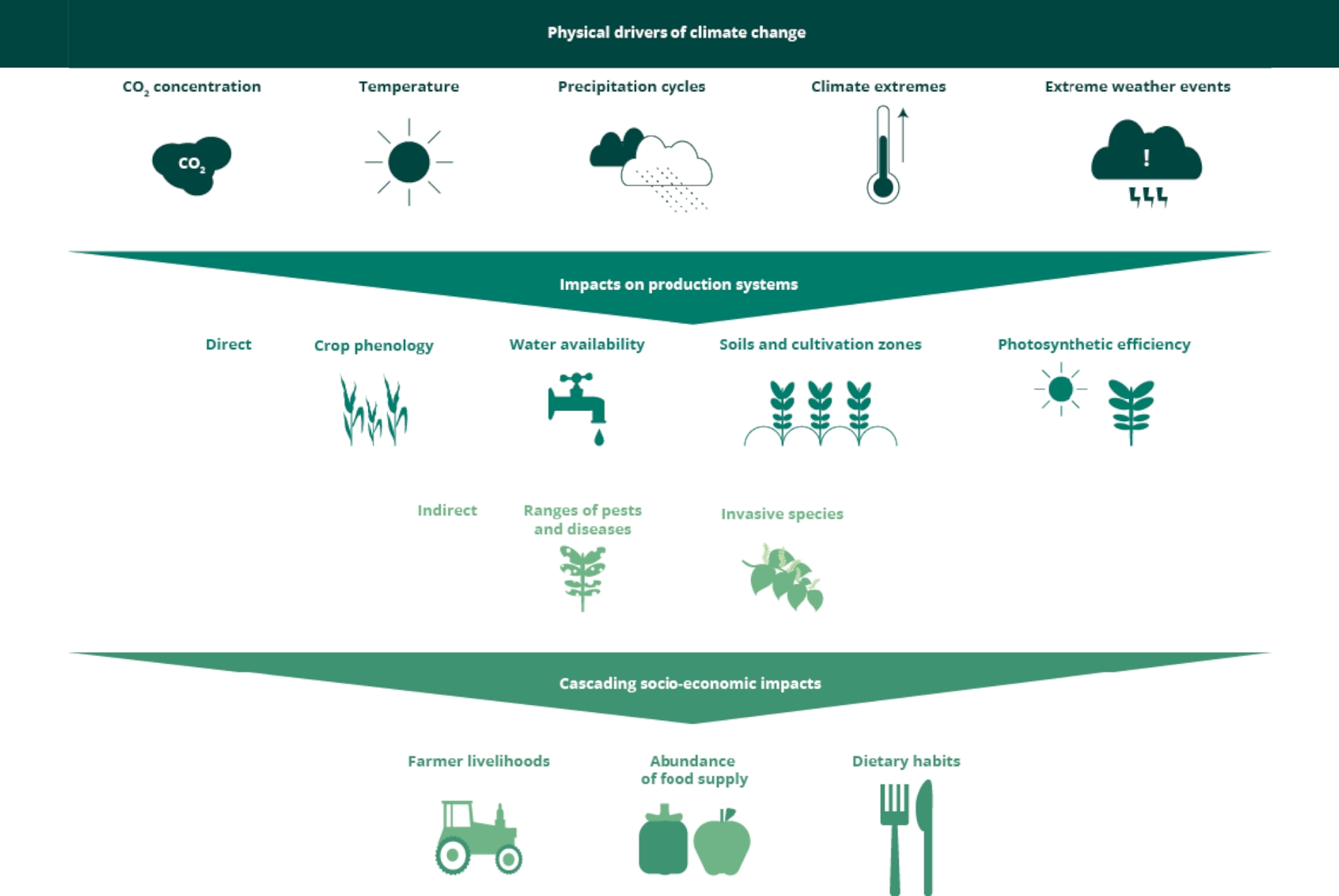
Figure: Arvis et al. (2020). Findings from the Joint Research Centres PESETA IV project (Feyen et al., 2020) suggest that, up to 2050, grain maize yields will decline by between 1 % and 22 % in the EU, and wheat yields in southern Europe by up to 49 %. In northern Europe, yields are projected to increase by between 5 % and 16 % (Hristov et al., 2020). Annual climate variability accounts for up to half of yield variance, depending on the crop and the region (Vogel et al., 2019). Considering that the frequency and severity of extremes will be aggravated by climate change (IPCC, 2014), increased volatility is to be expected.
STUDIES
2026-05-25
Nature-based solutions insights - Climate change is changing Europe’s food supply
The European Environment Agency (EEA) study, published in 2021 and conducted across Europe and global trade networks, found that climate change is quietly but powerfully reshaping how food reaches our plates.
Imagine this: Europe grows most of its own staples, yet depends heavily on a few countries for key imports. Today, 78% of palm oil comes from just Malaysia and Indonesia, 72% of soybeans from Brazil and the U.S., and 71% of maize from Brazil and Ukraine. Now add climate stress, yields could drop by up to 49% for wheat in southern Europe, while maize yields may decline by up to 22%.
It wouldn't result in immediate shortages, but rising volatility, shifting growing zones, and fragile supply chains. Investing in nature-based solutions, like regenerative agriculture, soil restoration, and agroforestry, helps stabilize yields, strengthen resilience, and secure future food supplies.
European Environment Agency. (2021). Global climate change impacts and the supply of agricultural commodities to Europe.
https://www.eea.europa.eu/en/analysis/publications/global-climate-change-impacts-and