News #12
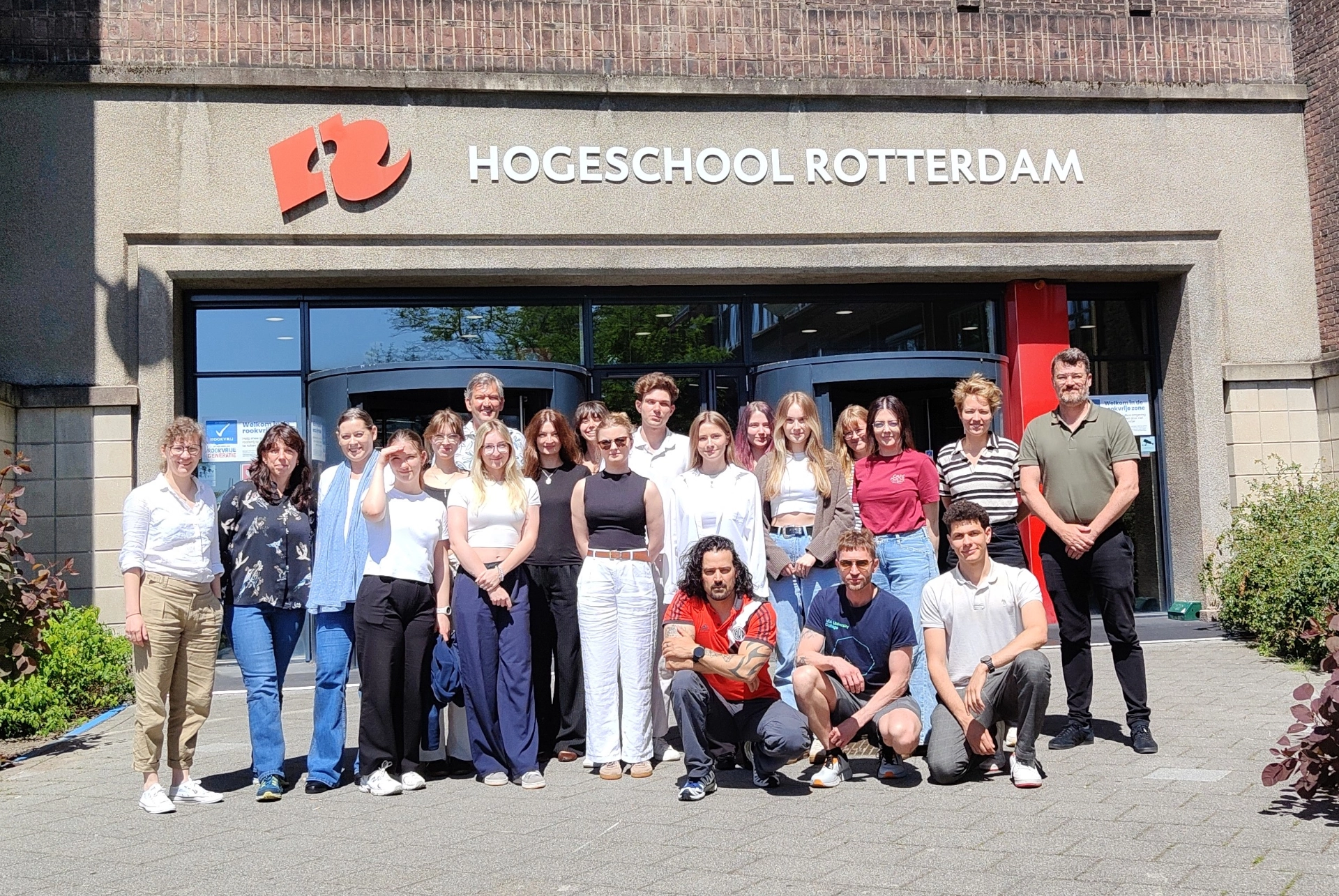
Figure: Own image.
NEWS
2026-05-27
Blended GINA International School Rotterdam - Greening Streets and Squares
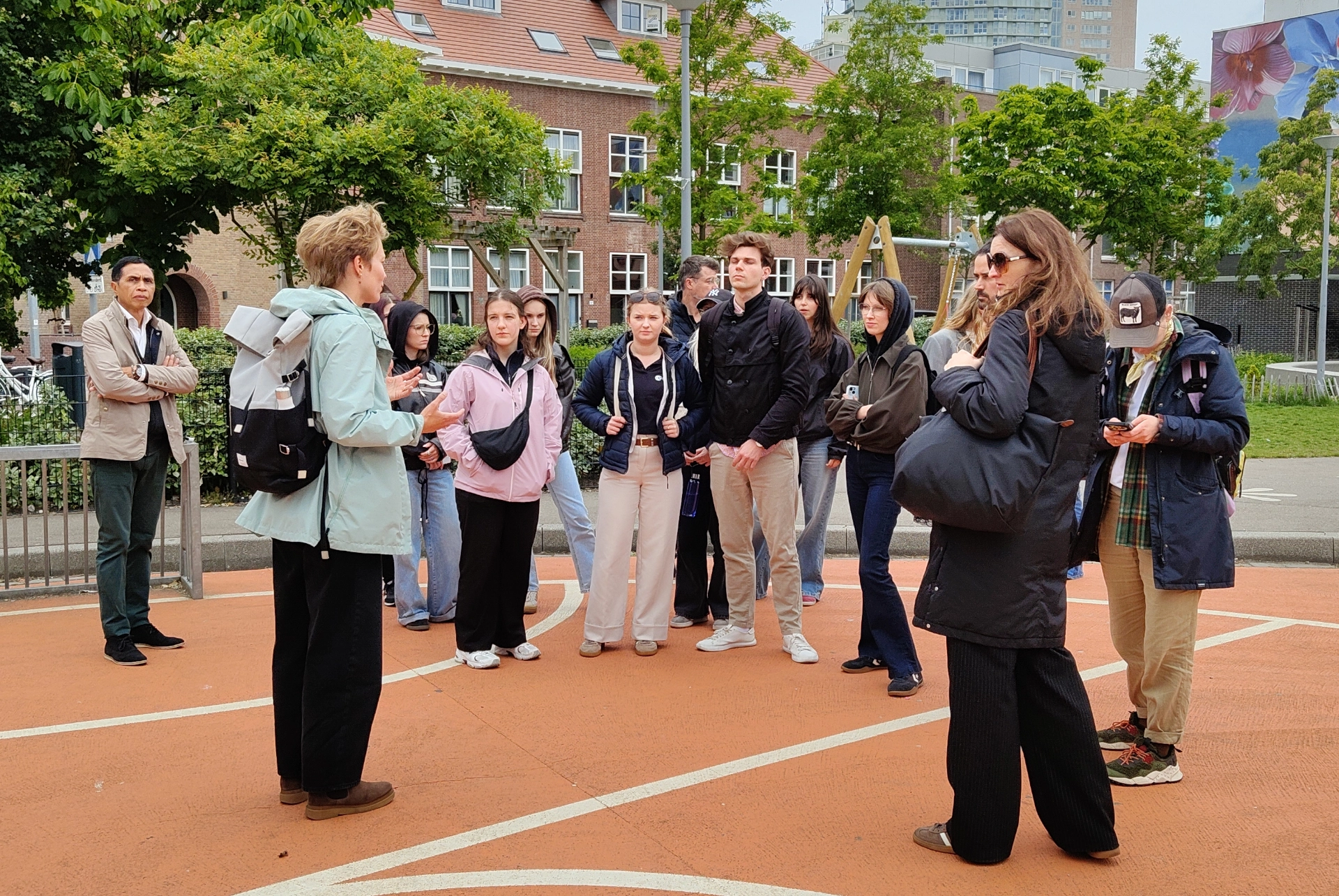
From May 19-22, the in-person part of the GINA Summer School took place in Rotterdam. The event brought together students from Warsaw University of Life Sciences, Poland, Gdańsk University of Technology, Poland, and VIA University College, Denmark.
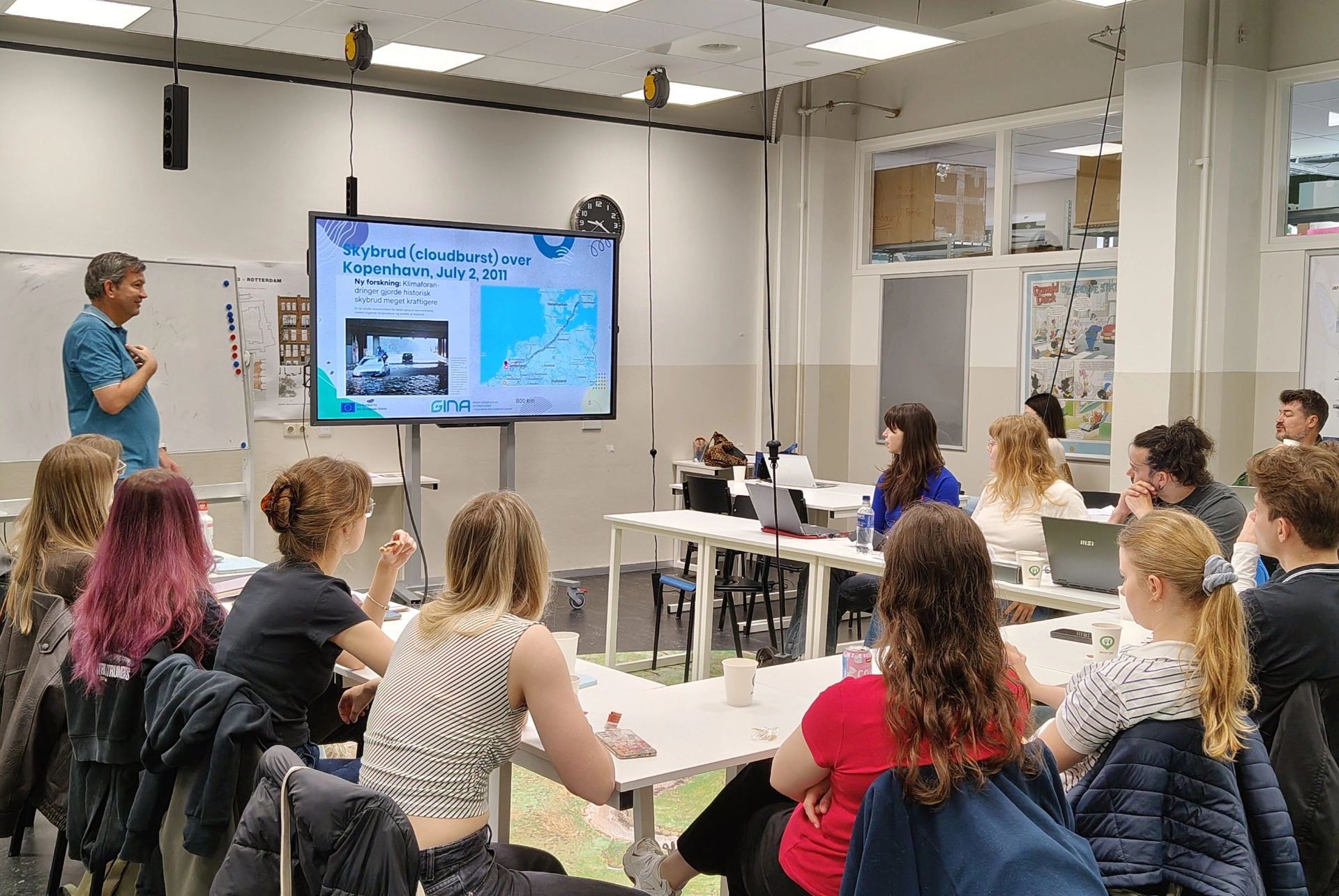
The GINA project focuses on developing competences related to Nature-Based Solutions (NBS), green urban transformation, and the education of future specialists in climate change adaptation. More information about the project is available on the GINA Project website.
The main task assigned to the students was to develop concepts for the transformation of selected public spaces in Rotterdam using blue-green infrastructure solutions together with strategies for social participation and community engagement. The workshop programme was based on Module 5 of the GINA e-course available on the GINA e-course platform Students worked with real spatial data obtained from Open Access Data sources and Web Map Services (WMS), as well as their own field observations and interviews conducted with residents and users of urban spaces. The analyses were carried out using QGIS software, in line with Module 2 of the GINA e-course. The developed concepts were continuously consulted and supported by academic staff from all GINA partner universities.
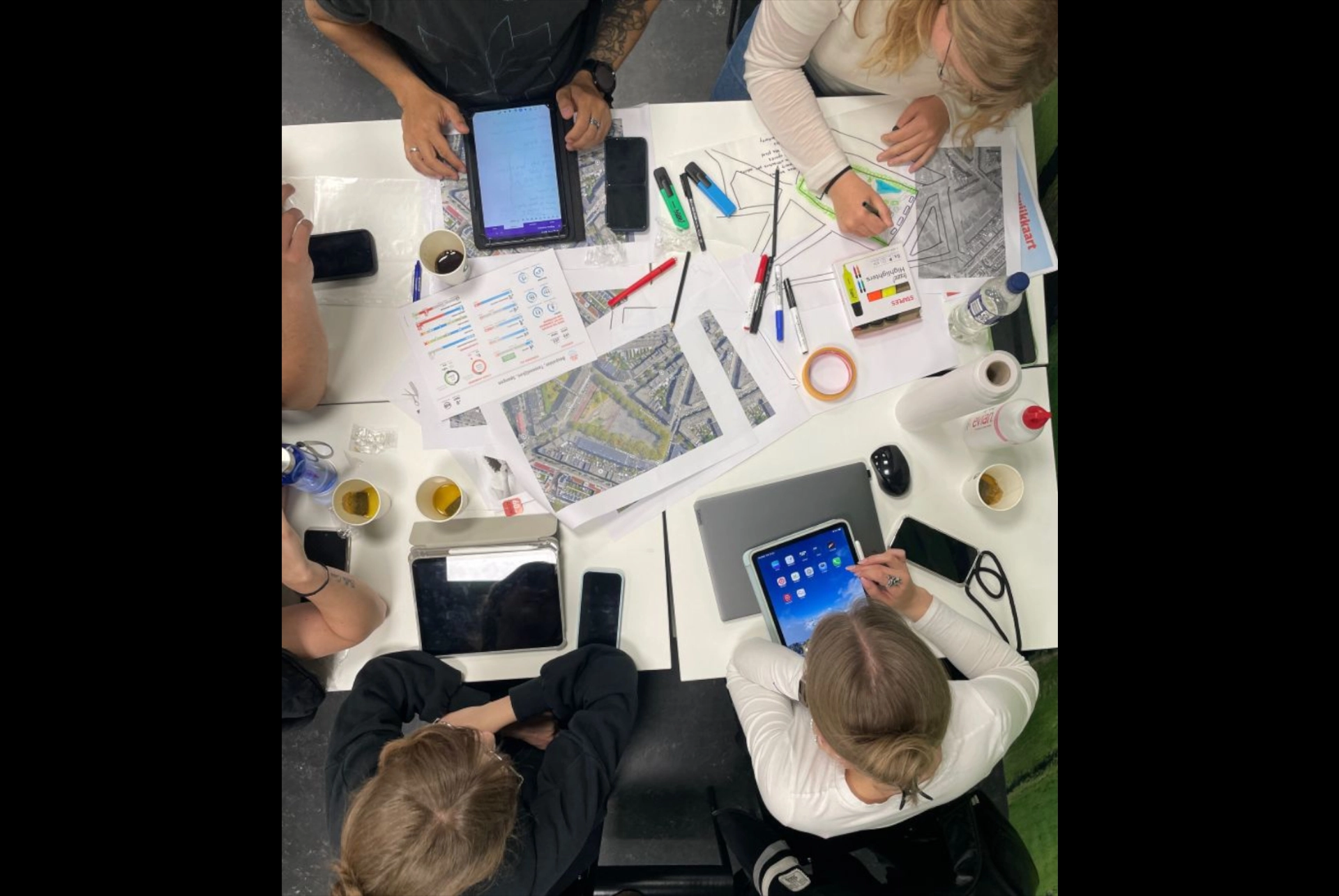
The GINA School was not only about learning and design, but also about exchanging experiences, inspirations, and building international relationships. It was a valuable time for developing new partnerships, sharing scientific and educational experiences, and discussing future GINA project activities.
Special thanks go to the organizer – Rotterdam University of Applied Sciences – as well as to Rick (T.H.) Heikoop and Ted Veldkamp for the excellent organisation of the event and the well-prepared school programme.
For more information about the project, visit:
GINA Project - https://projectgina.eu/
GINA e-course platform: https://gina.aau.at