News #14
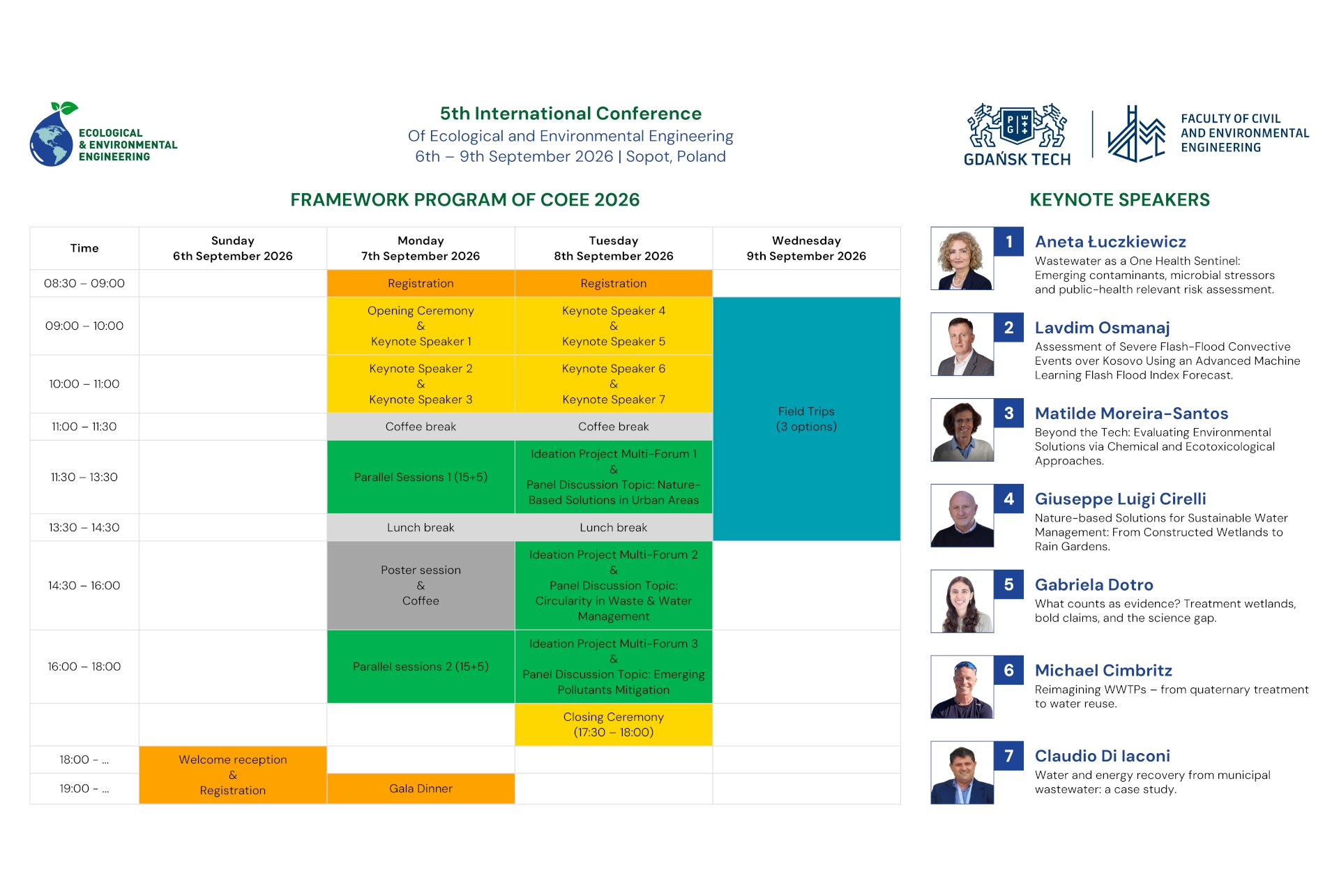
Figure: Own image.
NEWS
2026-06-11
Project Partners in Action - COEE 2026 Ideation Project Multi-Forum
Date: Tuesday, 8 September 2026
Place: Sopot, Poland
Join the COEE 2026 Ideation Project Multi-Forum
As part of the 5th International Conference on Ecological and Environmental Engineering (COEE 2026), we invite you to join the Ideation Project Multi-Forum, a dedicated event bringing together international projects, keynote speakers, researchers, practitioners, municipalities, and policymakers.
The day will begin with keynote lectures, followed by Ideation Project Multi-Forums and panel discussions. The forums will focus on three key themes:
- Nature-Based Solutions in Urban Areas,
- Circularity in Waste & Water Management,
- Emerging Pollutants Mitigation,
To facilitate the active participation of local and regional Polish stakeholders, simultaneous interpretation into Polish will be provided throughout the event.
To participate, use the registration link and choose the option:
- Ideation Project Multi-Forum 200 € - coffee break and lunch are included.